
| Guinea pig Immunoglobulin G1 ,IgG1 ELISA kit | |
| Standard | 13.5 ug/ml |
| Sample Volume | 10ul |
| Wavelength | 450nm |
| Intended Use | Enzyme immunoassay for the quantitative detection of Guinea pig IgG1 in serum, plasma, culture media, or any biological fluid. |

A-1/264A Paschim Vihar, New Delhi - 110063
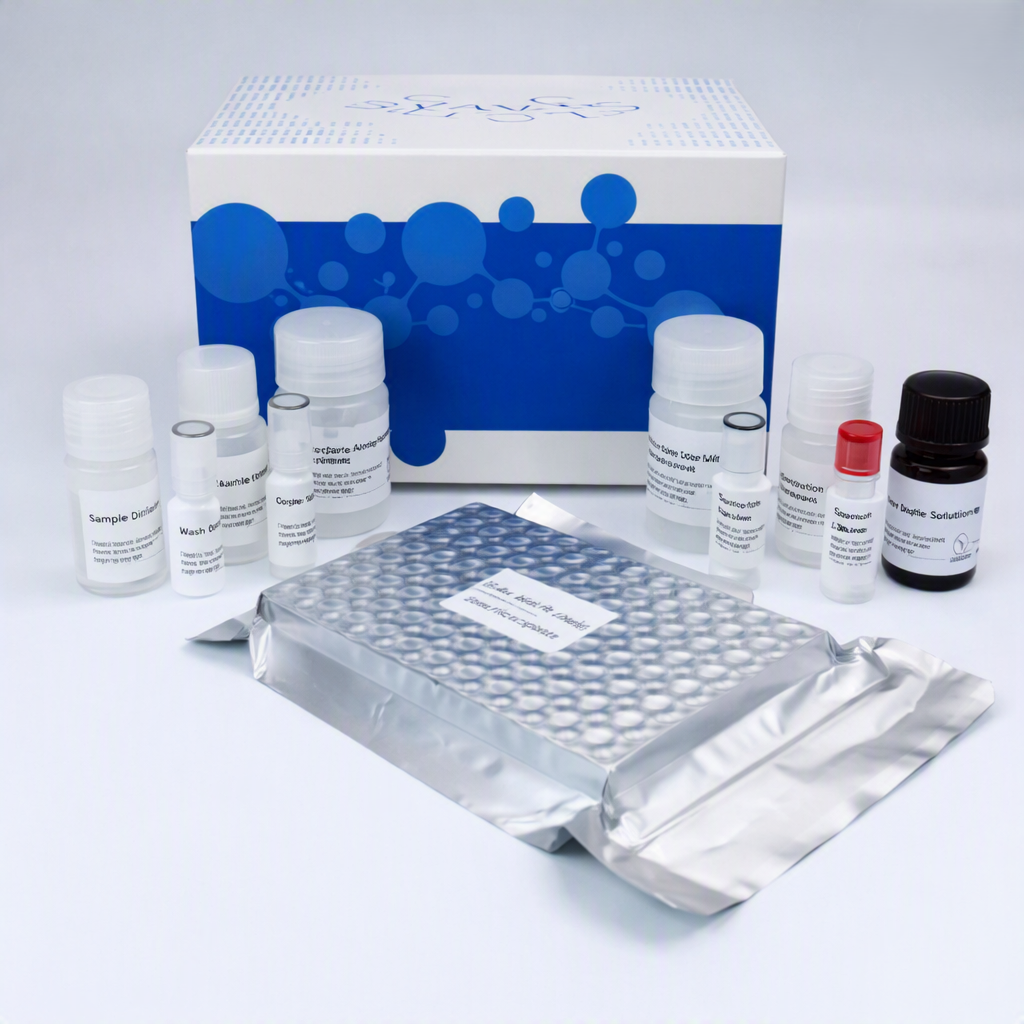
Guinea pig Immunoglobulin G1 ,IgG1 ELISA kit
| SKU Code | LBEK-031GP |
| Species | Pig |
| Sensitivity | 0.05 ug/ml |
| Detection-range | 0.2 ug/ml -10 ug/ml |
| Size | 96 T | 48 T |
| Price | POR |
| Brand | Link Biotech |
Additional information
| sensitivity | 0.05 ug/ml |
|---|---|
| detection-range | 0.2 ug/ml -10 ug/ml |
| Brand | Link Biotech |
The quantitative detection of Guinea pig IgG1 is based on the ELISA (Enzyme-Linked
Immunosorbent Assay) technique. The microplate wells are pre-coated with an antigen
specific to Guinea pig IgG1. The corresponding antibody in the sample or standards binds the
immobilized antigen after incubation. After washing the microplate wells to remove all
unbound sample material, horseradish peroxidase (HRP) labeled antigen conjugate is added,
which binds to the antibody, forming antigen-antibody-enzyme-labeled antigen complex upon
incubation. In a second wash step, all unbound material is removed. The immune complex
formed by the bound conjugate is visualized by adding Tetramethylbenzidine (TMB)
substrate which gives a blue color reaction in wells containing the complex. A stop solution
containing acid terminates the reaction, producing a yellow end-point coloration proportional
to the amount of specific antibody present in the sample. Absorbance is measured at 450 nm
using an ELISA microwell plate reader. Analysis is completed by comparing the OD values
of samples to a cut-off value.
- Serum preparation
After collection of the whole blood, allow the blood to clot by leaving it undisturbed at room temperature. This usually takes 10-20 minutes. Remove the clot by centrifuging at 2,000-3,000 rpm for 20 minutes. If precipitates appear during reservation, the sample should be centrifugated again.
- Plasma preparation
Collect the whole blood into tubes with anticoagulant (EDTA or citrate). After incubated at room temperature for 10-20 minutes, tubes are centrifugated for 20 min at 2,000-3,000 rpm. Collect the supernatant carefully as plasma samples. If precipitates appear during reservation, the sample should be centrifugated again.
- Urine samples
Collect urine into aseptic tubes. Collect the supernatant carefully after centrifuging for 20 min at 2,000-3,000 rpm. If precipitates appear during reservation, the sample should be centrifugated again. The preparation procedure of cerebrospinal fluid and pleuroperitoneal fluid is the same as that of urine sample.
- Cell samples
If you want to detect the secretions of cells, collect culture supernatant into aseptic tubes. Collect the supernatant carefully after centrifuging for 20 min at 2,000-3,000 rpm. If you want to detect intracellular components, dilute the cells to 1X100/ml with PBS (pH 7.2-7.4). The cells were destroyed to release intracellular components by repeated freezing and thawing. Collect the supernatant carefully after centrifuging for 20 min at 2,000-3,000 rpm. If precipitates appear during reservation, the sample should be centrifugated again.
- Tissue samples
Tissue samples are cut, weighed, frozen in liquid nitrogen and stored at -80℃ for future use. The tissue samples were homogenized after adding PBS (pH 7.4). Samples should be operated at 4℃. Collect the supernatant carefully after centrifuging for 20 min at 2,000-3,000 rpm. Aliquot the supernatant for ELISA assay and future use.
Notes:
- Sample extraction and ELISA assay should be performed as soon as possible after sample collection. The samples should be extracted according to the relevant literature. If ELISA assay can not be performed immediately, samples can be stored at -20℃.Repeated freeze-thaw cycles should be avoided.
- Our kits can not be used for samples with NaN3 which can inhibit the activity of HRP.